The Approach
The trees change before anything else does. You are still on the parkway, still technically driving, but somewhere around milepost 380 the hardwoods close overhead and the light goes amber and soft. Oak and hickory, layers of it, filtering the afternoon into something the sun did not intend. Your partner has her window down. The air is cooler than it was twenty minutes ago, thin with altitude, carrying something vegetal and clean that does not have a name. Neither of you has said anything in a while. The silence is not absence. It is agreement.
The ridge appears in pieces through the canopy. A shoulder of blue. A fold of grey-green where the afternoon haze has not burned off. Then the road curves and the whole thing opens: the French Broad valley below, Asheville pressed against the base of the mountains like a town that knows its place. You have been here before, or you have seen enough photographs to feel like you have. The valley still does what it does, which is make the car feel small and the weekend feel close.
The bag in the trunk was packed in fifteen minutes because this trip is not about what you brought. Somewhere below the parkway, a room is waiting with a tub and a view or a fireplace or a porch. The shape of your weekend depends entirely on which one you chose. Not which hotel. Which version of quiet.
The Cabin: Disappearance
The road to Willow Winds narrows twice. First when you leave the main route, second when the pavement turns to gravel and the trees press close enough to brush the mirrors. Your phone signal thins. The GPS says four minutes but the forest says longer. Distance works differently when the canopy is this dense and the grade is climbing. Then the gravel opens to a clearing, and there it is: a cabin with a stone chimney, a covered porch, and nothing else visible in any direction except ridge and sky.
You park. You stand in the clearing for a moment and hear it, which is to say you hear the absence of it. No traffic. No compressor hum. No neighbor's television through a shared wall. A creek, maybe, if there has been rain. A woodpecker, mechanical and distant. The air has a specific weight to it, cool and damp and faintly sweet, and you feel it on every surface of exposed skin.
Inside, the cabin smells like wood smoke even before you light the fireplace. The stone hearth is real stone, not veneer, and the logs beside it are split oak, not gas-fed ceramic. You put the bags down. You open the back door.
The deck faces east, toward the ridgeline. The outdoor tub is there, sunk slightly into the decking, stone-edged and steaming faintly in the late-afternoon air. Beyond it, nothing. No railing interrupts the sight line. The Blue Ridge fills the frame from left to right, layers of it, each ridge a shade lighter than the one before, until the farthest one dissolves into sky.
You were going to drive into town, eat somewhere on Lexington Avenue, walk the River Arts District. You were going to be the kind of couple that does things. Instead, your partner opens a bottle of wine, and you sit on the deck, and the plan dissolves without anyone mourning it.
Night comes slowly at this altitude. The ridge does not darken; it deepens, going from blue to charcoal to a black line drawn against a blacker sky. Stars appear in the wrong places, too many and too low, because there is no ambient light to wash them away. You are in the tub by now. The water is hot and the jets are on. The mountain air on your wet shoulders is sharp enough to make you inhale. Your partner's eyes are closed. The only sound is water moving and the particular kind of silence that mountains hold. Not empty, but held.
You do not leave the cabin that night. You do not leave it the next morning, either. Someone makes coffee with the French press. Someone wraps a blanket around her shoulders and stands on the deck while the fog lifts off the valley.
Not because something is wrong. Because something is right, and words would interrupt it.
The Resort: Emergence
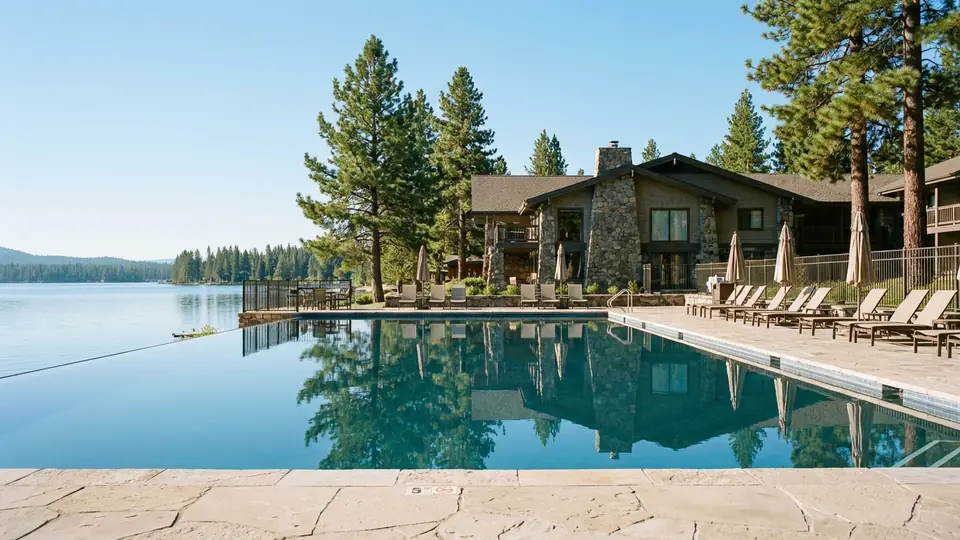
The Omni Grove Park Inn announces itself before you arrive. The mountain grew it. That is how it looks from the road: a long wall of granite boulders and copper-tinted concrete set into Sunset Mountain above the city, something the ridge could have produced on its own. The stone was quarried locally in 1913. You can feel the age of it when you walk through the front doors. Not decay but accumulation. A century of hands on banisters, a century of fires in a hearth wide enough to stand inside.
The lobby is a cathedral. The ceiling vaults overhead, supported by stone columns the width of tree trunks. The two fireplaces at either end burn seasoned hardwood in pits that could hold a small car. You stand in the center of it and look up. Your partner reaches for your hand without turning her head, the way people do in large churches and old-growth forests.
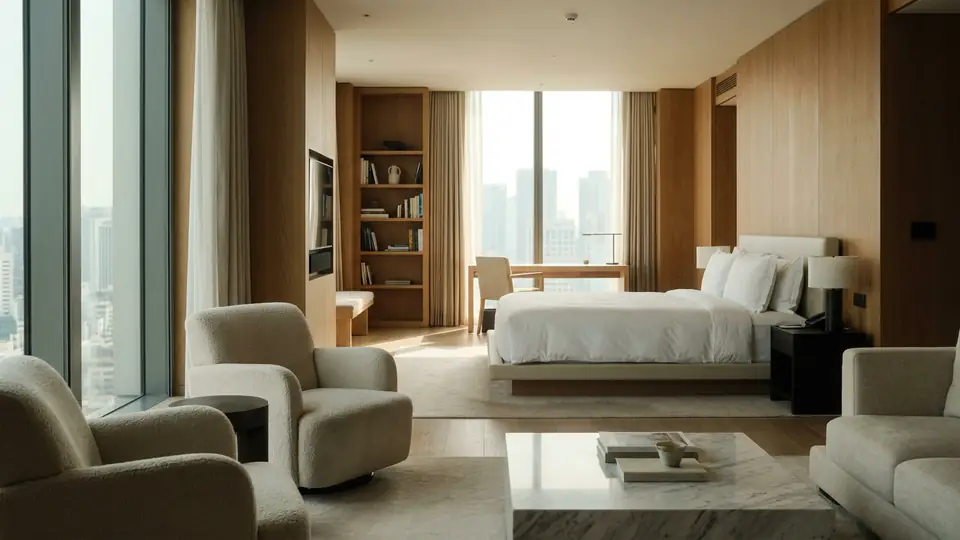
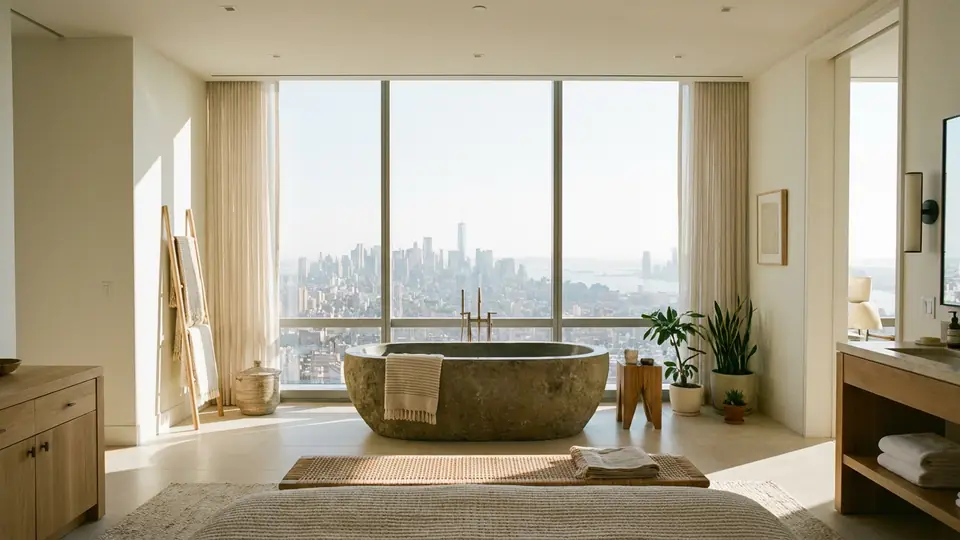
Your room is high up, facing west, and the city of Asheville is arranged below you like a model someone built on a table. The freestanding tub is positioned near the window. You will return to it. But first, you descend.
The spa is underground. Carved into the mountain, below the lobby, below the foundation, into the rock itself. You enter through a corridor of smooth stone and warm air. The light changes, goes amber, goes low. The pools are set into the floor at intervals: cool, warm, hot, cold. A waterfall runs down one wall, not decorative but functional. You stand beneath it. The stone floor holds steady under your feet. The air smells like eucalyptus and something mineral, something old, drawn from the same rock that holds the building up.
You move through the sequence. Your partner is somewhere in the steam, visible and then not, close and then a room away. There is no urgency. The spa's design encourages drift. You lose track of whether you have been here forty minutes or two hours. You feel the mountain above you, grounding and warm. You are inside the earth. The earth is warm.
Then the elevator. The doors open on your floor and the shift is instant: from underground stone to open sky. The window fills with blue ridgeline. You were inside the mountain; now you are above the city. You run the tub. The water fills the room with steam and the glass fogs at the edges, framing the view in a soft border. Your partner sits on the window ledge with a glass of something and watches the city settle into evening.
The Village: Return
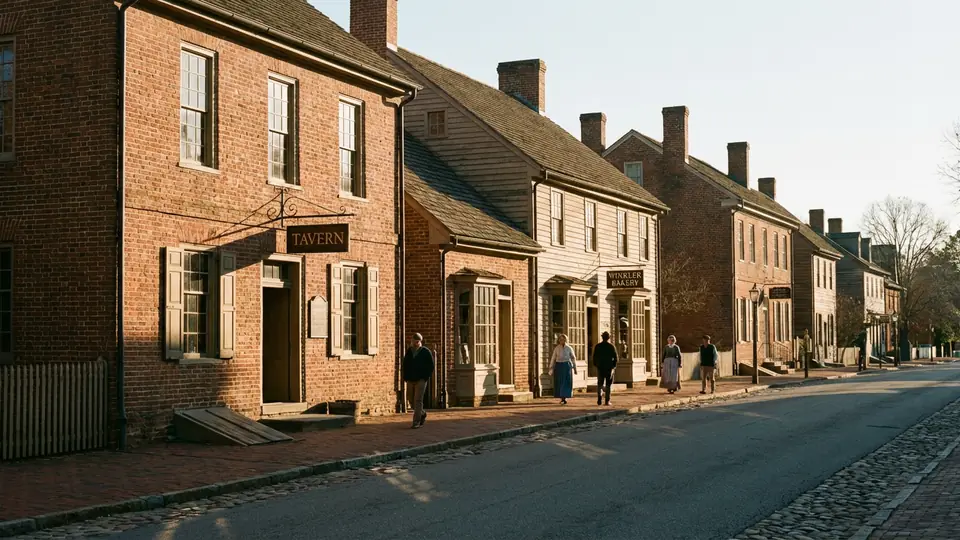
The Lion and the Rose is a house. A 1898 Georgian with a porch that wraps around two sides and a garden that someone tends with visible devotion. The neighborhood is Montford, a mile north of downtown, close enough to walk but far enough that the noise drops to a murmur by the time you reach the front gate. You check in and the house receives you the way old houses do. Not with efficiency but with temperature, the particular warmth of rooms that have been heated by bodies and conversation and wood fires for more than a century.
Your room has a freestanding tub and a fireplace. The floorboards announce your footsteps. You put the bags down and you leave, because this version of the weekend is about what is outside.
Downtown Asheville is a twenty-minute walk through Montford's tree-lined blocks, past other houses with other porches, other couples on other weekends. You eat on Lexington Avenue because someone propped a chalkboard menu in a window and the handwriting was good and the smell from the doorway made the decision for you. The restaurant is small. The menu is short. The bread arrives warm and you eat it with butter and salt and your partner says something about how bread like this used to be the baseline and now it is a luxury, and you agree, and the conversation wanders. Whether to get a dog. Where to go for Thanksgiving. Nothing that needs an answer tonight.
After dinner, you walk. The River Arts District, maybe, where the studios are closed but the murals are lit and the French Broad River reflects the streetlights in long wobbly lines. Or you do not. Maybe you just walk up Haywood Street and feel the mountain air sharpen as the evening deepens. October air, if you timed it right. The kind that makes you pull your jacket closed and walk a little closer together.
Then the walk back. Uphill, twelve minutes, the sidewalk cracked and familiar already even though you have only walked it once. The porch light is on. Someone has left a bottle of wine on the side table by the rocking chairs. You sit out there for ten minutes, breathing the cold air, watching a neighbor's light go off across the street. Then you go inside and draw the tub. The water fills slowly, and the room fills with steam, and the fireplace is already going because someone lit it while you were at dinner.
Morning
The ridge is still there. It is the first thing you see, whether through a cabin window, from a resort terrace, or past a porch railing. The same ridge, the same blue, the same silence, lit now from the east, going pink and then gold and then the flat honest light of morning.
Coffee in both hands. Your partner is reading something or looking at something or not doing anything at all. The weekend is ending, technically. Checkout is in a few hours. The car will reverse the drive, and the trees will open up, and the valley will disappear behind you. But the feeling has already landed. It landed somewhere between the steam and the silence and the weight of another person nearby.
The quiet found you.