How It Started
The first time was an accident. We had booked a cabin in West Virginia for a long weekend, and the kennel canceled two days before. So the dog came. June. Seven-year-old shepherd mix, one ear up, one folded at the tip. She takes her responsibilities seriously and has never once relaxed on command.
We did not know yet that this would become the thing we do. The ritual. Drive somewhere with trees, unload the car while June inspects every corner of the property in a precise counterclockwise sweep, cook something simple, and then, when the sky starts to purple, fill the hot tub on the deck and get in. June does not get in. June has opinions about water that do not include submersion. But she stays. She always stays. She positions herself between us and whatever the landscape holds, and she watches.
We have done this enough times now to know: the tub is the same everywhere. The jets, the heat, the steam curling off the surface into cold air. What changes is June. What she hears, what she sees, what she decides requires her attention. The dog on the deck is a barometer. She tells you where you are more faithfully than any booking description ever could.
Harpers Ferry
The cabin sat above a river valley outside Harpers Ferry, a wood-finished modern box with floor-to-ceiling windows and a covered deck that faced west. The hot tub was tucked under the overhang, shielded from rain, open to the view. Below, the Potomac carved between ridges that folded into each other until they turned blue and then grey and then gone.
We arrived on a Friday in October. June did her perimeter check in under four minutes; the property was small, fenced on two sides, with a gravel path down to a fire pit we never used. She approved. By the time we had unpacked groceries and opened wine, the light had gone amber and the valley was filling with shadow from the bottom up, like water rising.
The tub took forty minutes to reach temperature. We sat on the deck and watched the valley while it heated, June between our chairs, her good ear tracking a hawk that circled over the far ridge. When we finally got in, the water was almost too hot, the way it should be. June stood at the edge for a moment, sniffed the steam, sneezed once, and then settled onto the deck boards about three feet from the rim. Close enough to supervise. Far enough to stay dry.
That first evening set the template. The valley was enormous and still. No roads visible, no houses lit below. June watched the treeline where the ridge met the sky, her head moving in slow arcs, tracking things we could not see or hear. A deer, maybe. Wind in the canopy. Whatever it was, she processed it calmly; her tail was low and loose, her breathing even. Occasionally she would look back at us, confirm we were still submerged and accounted for, then return to her post.
We stayed in the tub for an hour. Talked about nothing in particular. The kind of conversation that only happens when there is no phone within reach and no agenda beyond being warm. At one point, June walked over and put her chin on the rim of the tub, right between us. Her nose was cold. A drop of condensation ran off the edge and landed on her snout, and she pulled back with a look of profound betrayal.
We laughed. She repositioned two feet farther from the tub and resumed watching the valley. The stars were coming in. The steam rose and vanished. The dog stood guard over nothing, and we let the water hold us. We drove home on Sunday and started looking at cabins for December.
Hocking Hills
We booked Cherry Ridge Retreat for December, a cabin buried in old-growth hemlocks south of Logan, Ohio, where the canopy closes above the road a mile before you reach the property and does not open again. The cabin was tucked into a hillside, surrounded on three sides by trees so tall they blocked the sky. The deck jutted out over a ravine. There were no sightlines longer than thirty feet in any direction. The tub was at the far end of the deck, open to the air, open to whatever was in those woods.
June did not approve. Her perimeter check took eleven minutes. She kept returning to the same corner of the deck, ears forward, staring into the hemlocks with the intensity of someone who has been told there is a problem but cannot locate it. The forest was loud in the way only quiet forests are: wind moving through upper branches, the creak of trunks shifting weight, a rhythmic dripping from somewhere we never identified.
We got in the tub at dusk. June lasted ninety seconds in her settled position before a branch snapped somewhere in the ravine and she was on her feet, rigid at the railing, one paw raised. We waited. She waited. Nothing emerged. She sat back down. Forty seconds later, a rustle in the canopy. Up again. Ears swiveling. Another nothing.
This was the pattern for the next hour. We would sink into conversation, the water would work on our shoulders, and then June would launch herself upright and we would both go silent, listening for whatever she had heard. We started to distinguish her alerts: the full stand with raised paw meant something large had moved; the head-turn-while-lying-down was a squirrel or a bird; the low rumble in her chest, which happened exactly once, was something she considered genuinely worth our attention. We never found out what. The woods kept their secret and June kept her counsel.
The soak was not peaceful. It was alert, punctuated, a little bit electric. We got out buzzing. Later, in bed, June slept between us and did not stir once. Whatever had been in the ravine had evidently clocked out for the night. We lay there listening to the hemlocks creak and agreed, without quite saying it, that this was the best one yet.
Pigeon Forge
The cabin was up a switchback road outside Pigeon Forge, close enough to town that the glow of the Parkway was visible through the trees on the drive in. A dog-friendly A-frame with a king bed, a stone fireplace, and a jetted tub on a deck that overlooked a wooded slope. At the bottom of the slope, another road. Beyond the road, the faint percussion of Pigeon Forge being Pigeon Forge.
June's perimeter check was thorough but uneasy. She kept pausing at the deck railing, nose working, cataloging scents that were not forest. Woodsmoke from a neighboring cabin. Fried something from down the mountain. The distant hydraulic hiss of a bus, probably a Dollywood shuttle. She looked at us with an expression we had come to recognize, the one that says: I have concerns about this location but will reserve judgment.
We filled the tub. We got in. The water was good, the jets were strong, the sky through the trees held a few stars competing with the ambient light from town. And June, for the first twenty minutes, could not settle. She paced the deck in a tight circuit. Every time a car door shut somewhere below, she would stop and orient toward it. A dog barked in the distance; she barked back once, a single declarative woof, then sat down as if she had handled the situation.
It was the only evening where June's commentary felt like criticism. Not of us. Of the booking. She could hear other dogs. She could hear roads and parking lots and the muffled bass of someone's sound system. The deck was private. The tub was ours. But the dog would not let us pretend we were in wilderness. Every time we started to settle into the fiction that we were far from everything, June's head would snap toward a sound that said otherwise.
We stopped trying to have the remote mountain experience the cabin listing promised. We had the experience we were actually in: a warm tub on a cold night, close to a tourist town, with a dog who would not let us lie to ourselves about it. We talked about the trip differently that night. Less "is not this peaceful." More "remember when we could hear the go-kart track from the tub and June lost her mind." The dog was right. This was not the wilderness. It was still good.
June finally settled around nine, curling into a ball at the foot of the tub with her back to the valley, facing us. She had given up on monitoring the perimeter. Whatever Pigeon Forge was doing down there, she had decided it was not her problem. She watched us instead. Chin on paws. Eyes moving between our faces. We were, apparently, the most interesting thing left.
Estes Park
We saved the best for last, though we did not know it at the time.
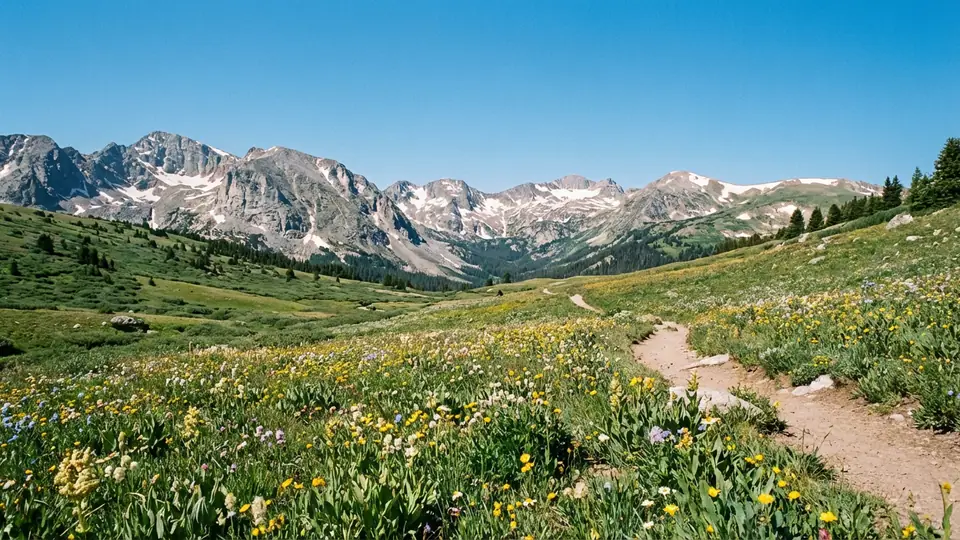
Castle Mountain Lodge sits on the river near Rocky Mountain National Park. The cabins are simple, the grounds are wide, and the elk wander through like tenants who have been here longer and know it. We checked in on a Thursday in late September, the aspens turning, the air thin and bright. The outdoor hot tub was behind our cabin, facing a meadow that sloped down to the river. Mountains in every direction. June's perimeter check took twenty-two minutes. She found a lot to consider.
The first sign was the smell. June caught it before we had finished unpacking, pressing her nose to the gap under the cabin door with the focus of a bomb-detection dog. Elk. The whole property smelled of elk to anyone with the equipment to detect it. June had the equipment. She spent the next hour on the deck, standing at the railing, nostrils flaring, scanning the meadow below with the intensity of a submarine commander who has been told to expect contact.
We filled the tub at sunset. The Mummy Range caught the last light and went gold. We got in. June took her position at the railing. For ten minutes, everything was perfect. The water, the mountains, the light, the dog silhouetted against the sky. We had wine. We were holding hands. It was the postcard.
Then the elk came.
They emerged from the tree line at the meadow's edge, five of them, moving with the slow authority of animals who have never been hurried. A bull with a rack that caught the last light. Four cows behind him. They grazed into the meadow, fifty yards from the cabin, and June saw them.
She did not bark. She did not run. She went rigid. Every muscle locked. Her tail, which had been loose and swaying, became a straight horizontal line. Her ears, the one up and the one folded, both pressed forward as far as anatomy allowed. A sound came out of her that we had never heard before. A high, tight whine, barely audible. The sound of a dog whose entire evolutionary history says one thing and whose training says another.
We watched our dog vibrate at the railing while five elk grazed in the last light. The bull raised his head and looked directly at the cabin. June made the sound again. One of us said, "June, leave it." June did not leave it. June had never been less likely to leave anything.
The standoff lasted twenty minutes. The elk grazed closer. June's whine became a tremor that ran through her whole body and transmitted through the deck boards into the tub. We could feel her vibrating in the water. A sixty-pound shepherd mix trying to hold herself together in the presence of animals that outweighed her ten to one.
We laughed until the water shook. Not at June. With June. At the whole scene: the postcard sunset, the majestic elk, the dog losing her composure, the two of us trying to have a soak while the deck hummed with canine tension.
The elk moved on when the light went. June stayed at the railing for another thirty minutes, watching the tree line where they had disappeared, unwilling to concede that the situation was resolved. We topped off the hot water and stayed in until our fingers pruned, replaying the standoff, doing impressions of June's face when the bull looked at her. The stars were enormous. The river made its sound. The dog eventually left her post and came to the tub's edge and put her chin on the rim, right between us, the way she does. Her nose was cold. She was still trembling, just slightly.
Morning
The tub was cold when we woke up. Grey light through the curtains, the meadow empty, the elk gone to wherever elk go at dawn. June was between us in the bed, on her back, legs in the air, taking up a proportion of the mattress that defied her actual dimensions. Her ribs rose and fell. Her paws twitched in a dream. Chasing the elk, probably. Catching them, in the dream version.
One of us was awake. Looking at the dog. Then at the other person. Then at the window, where the meadow was quiet and the mountains were just starting to catch light along their highest edges.
We would book another cabin. We always do. June would take her position on the deck, and the evening would go sideways, and we would come home covered in dog hair already looking at listings.
Her ribs rose and fell. The mountains caught the light. We let her sleep.