You have the ring. It is in your sock drawer, or in the glovebox, or in the inside pocket of a jacket your partner has never seen you wear. You have decided this is not going to happen at a restaurant where a waiter might interrupt, or on a hiking trail where the wind will swallow what you say, or in front of anyone at all. You have chosen a room. A private room, with a tub, and a door that locks, and no audience but the person you are asking. Good. That is the harder choice, and the better one.
But now you have a design problem. A restaurant does the work for you: the lighting, the table, the moment when the plates are cleared and the silence opens up. A room does nothing for you. A room is a bed, a bathroom, a window, a door. It becomes what you make it. The question that will follow you from the booking confirmation to the second you reach for the box is this: how do you plan every detail so the moment itself feels like it was never planned at all?
The answer is in the room, the hour before, the five minutes during, and the morning after, in that order.
The Room
Choosing the room is the first creative decision you will make, and most people treat it as a logistics problem. They filter by price, by location, by availability. They book whatever has "jacuzzi" in the listing title and a decent photo. This is a mistake. Not because those rooms are bad, but because the layout of the room will determine the choreography of the evening, and you should be choosing with the evening in mind.
Think of it this way. When your partner walks through the door, what will they see first? The tub, the bed, the window, the candles you lit twenty minutes ago? The sightline from the door to the tub is the most important spatial relationship in the room. No booking site will tell you what it is. You need to look at photos carefully. You need to call and ask.
There are, broadly, three kinds of rooms that work for this.
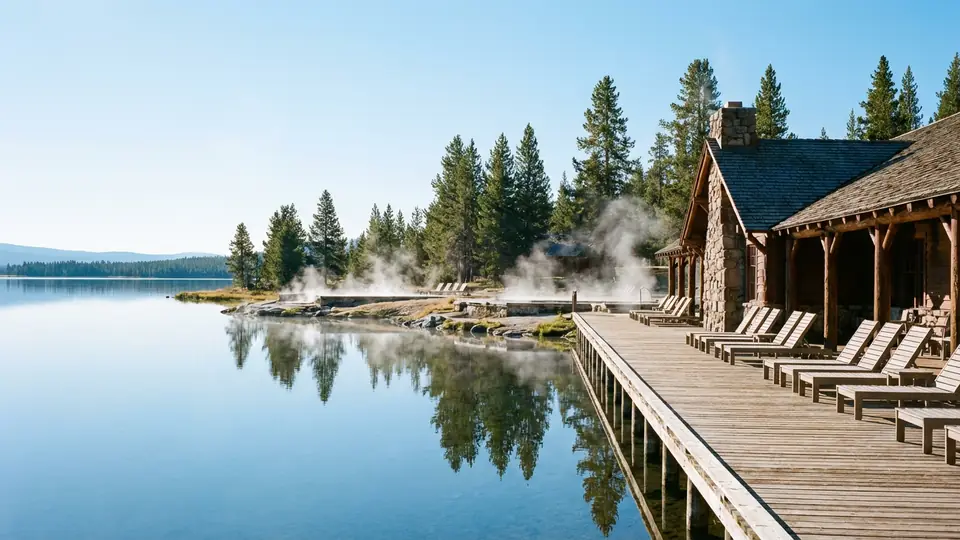
The first is the cabin with the deck tub. A place like Horizon Hill in Berkeley Springs puts the hot tub on an open deck, which splits your staging area in two. The ring stays inside. The proposal happens at the threshold or after you both come back in from the cold. Weather matters here, and so does sunset direction. If the tub faces west and you are planning for a February evening, the light will be gone by six. The evening starts earlier than you planned.
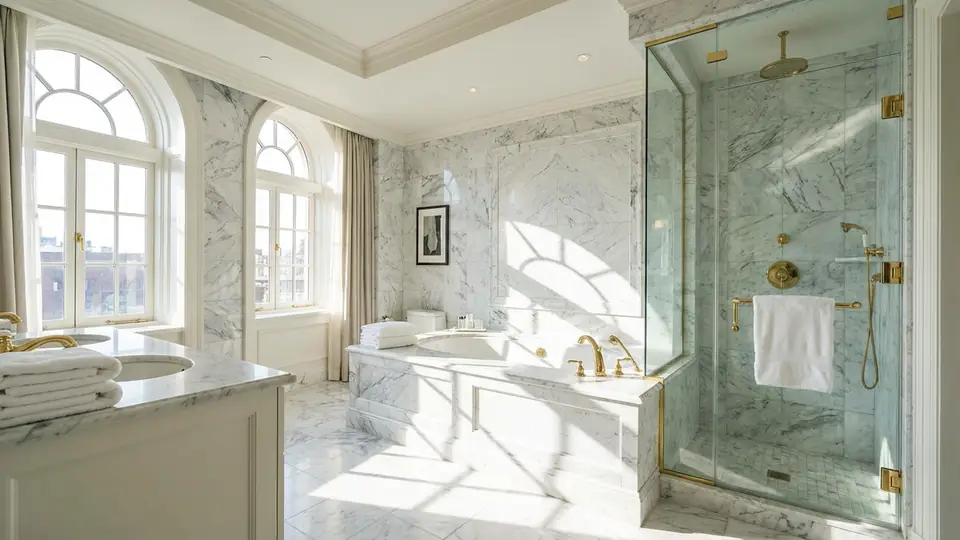
The second is the in-room freestanding tub. The Reserve at Hot Springs is the cleanest example: a freestanding tub near the fireplace, warm light that the room produces on its own. The tub is the visual center. The fireplace handles the lighting. Everything happens in one space, which means fewer transitions, fewer moments where you have to engineer your partner from one place to another. If you want to control the environment completely, this is the architecture you want.
The third is the property-as-setting room. Beaver Lakefront Cabins in Eureka Springs is couples-only with a private hot tub and lake views. The entire property is part of the staging: the walk from the lake at dusk, the isolation, the sense that you have rented not just a room but a world.
Each of these architectures produces a different proposal. None is better. But you need to know which one you are working with before you can plan the evening. The room type dictates what follows: where the ring hides, when the tub runs, where you are standing when you ask.
The difference between a jacuzzi suite and a room with a jacuzzi matters more than you think. Look at photos of the bathroom. If the tub is behind a closed door, separate from the main room, the proposal will feel like it happens in a bathroom. You want the tub in the living space, or on the deck, or in a room where the bedroom and the bath are one continuous space.
The celebration and the moment are the same event, in the same room, with no transition required.
The Setup
Your partner is at the hotel bar. Or on a walk you suggested. Or in the shower, which gives you eleven minutes if you are lucky. The hour before a proposal is the loneliest hour of your life. You know something enormous is about to happen, and you cannot tell the one person you tell everything to. So you work.
Start with the tub. Fill it now, not later. A tub that is running when your partner walks in is noise and steam and the suggestion that you were doing something while they were gone. A tub that is already full, still, warm, and waiting is a room that was prepared. The difference is the difference between a set that is being built and a set that is ready. You want ready.
Temperature matters more than you expect. The room should be warm. Not tropical, not sauna-warm, but warm enough that the idea of getting into water feels like a continuation, not a shock. If the room has a fireplace, light it. If it has a thermostat, set it to 72 and leave it. The goal is a room where the air and the water are in conversation, where moving from one to the other feels natural.
Candles. Yes, but fewer than you think. The internet will show you photos of bathrooms with forty candles on every surface, and in person this looks like a vigil. Three to five, placed low, on surfaces that are not near the tub jets or the edge where an elbow will knock them into the water. Tea lights in glass holders are more stable than tapers. They will not drip wax onto marble you have to explain to the front desk. If the room has a dimmer switch, use it. If it has overhead fluorescents and no dimmer, candles become essential, but keep them clustered, not scattered. A single pool of warm light is more powerful than twelve points of flicker.
Music. Play something, because silence in a hotel room is the hum of the HVAC and the muffled television next door. But play it from a speaker you brought, not from your phone propped on the sink. Volume should be low enough that you will not have to raise your voice when the moment comes. Genre matters less than you think. Play what you listen to together. The goal is not atmosphere; the goal is normalcy. The room should feel like an elevated version of a night in, not a production.
The ring. It needs a location that is within arm's reach of where you will be when you decide it is time, and it needs to be dry. A toiletry bag works. A jacket pocket draped over a chair works. The nightstand drawer works if the nightstand is close to the tub. What does not work: the pocket of pants you are no longer wearing, or the safe you will fumble with. Any location that requires you to leave your partner's side in the middle of a sentence is the wrong location. You will be nervous, and distance is the enemy of nerve. Keep the ring close.
Before you count on the hotel for staging, call and ask three questions. Can the room be set up while we are at dinner? What is included and what costs extra? Who will have access to the room, and when? The answer to the third question matters most. You do not want housekeeping walking in at 7:15 to turn down the bed while you are on one knee next to the tub.
The Moment
You are both in the room now. The tub is warm. The candles are lit. Music is low. Your partner thinks this is a nice evening, which it is. The evening is already happening, and the proposal is a turn inside it, not an interruption of something else.
Do not do it the second you sit down. The energy when you first enter a room together is high, logistical, coats-off-where-do-I-put-my-bag. Let that settle. Let the first glass of whatever you are drinking do its work. The window you want is after the first pour and before the second; after the room has stopped being new and before the evening has become routine. Fifteen to twenty minutes in. You will feel it. There is a moment when your partner leans back, or says something small and happy, and the room goes quiet in a specific way. That is when.
The physical logistics of proposing near a tub are worth thinking through in advance. If you are both in the water, your hands are wet. The box will get wet. The ring will be fine; rings survive water. But a velvet box that has been in a hot tub is a ruined velvet box. If your partner wants to keep it, to photograph it, think about this now. Option one: propose before you get in. The tub is the backdrop, not the setting. You are standing or sitting next to it. Your hands are dry. The box opens cleanly. Option two: propose in the tub, but keep the box on the ledge. Reach for it. Open it above the water. This works if the ledge is wide enough and close enough.
Do not give a speech. The urge will be there, and you will have rehearsed something in the car or the shower, and it will sound rehearsed. Say one thing that is true and specific. Not "you are the love of my life," which is true but which could be said by anyone to anyone. Something that only you could say to only them. A memory, a detail, a moment that made you certain. One sentence. Then the question.
And then: the after. This is why you chose this room. In a restaurant, after the yes, you are still in a restaurant. Other people are clapping. A waiter brings dessert. You pay the bill. You walk to the car. The moment is already dissipating. In a jacuzzi suite, after the yes, you are still in warm water, in a locked room, with nowhere to be. The ring goes on the ledge or the nightstand. The champagne, if you have it, comes out now. The tears, if there are tears, happen in a place where no one else can see them. The celebration and the moment occupy the same space, with no transition required.
The restaurant ends. The overlook gets cold. The park closes. The room does not end until you leave it. And you do not have to leave it tonight.
The Morning After
Here is the part nobody writes about. It separates a proposal you talk about for decades from one you mention with a small caveat. The morning is fragile. Everything that was extraordinary last night is, by 8 a.m., subject to the ordinary machinery of hotels: checkout times, housekeeping schedules, the reality that you are in a rented room with a checkout policy.
Book two nights. This is not optional if you can manage it. A single-night stay means that the morning after your proposal, you are packing. You are checking the bathroom for forgotten chargers. You are standing at a front desk settling a bill. The afterglow has a clock on it, and the clock reads 11:00 a.m. If you cannot book two nights, call ahead and arrange late checkout. Get it confirmed in writing, by email, with a specific time. A verbal "we will see what we can do" from the front desk is not a confirmation. It is a polite deferral that will become a 10:45 knock on the door.
Breakfast matters more than you think. Room service, if the property offers it, is the right answer. Not because it is luxurious. Because it means neither of you has to get dressed, leave the room, and sit among strangers wearing a new ring and the dazed expression of people whose lives changed eight hours ago. If room service is not an option, make a reservation the night before at whatever the hotel restaurant is, or know the name of a place within a five-minute drive. Do not figure this out at 9 a.m. while hungry and happy and half-dressed. The scramble for breakfast is a small thing, but small logistics erode a perfect morning.
The ring will look different in daylight. This is a moment worth protecting. Morning light through a hotel window, coffee on the nightstand, your partner turning their hand to watch the stone catch the sun for the first time. This is not a moment you can plan. But you can clear the space for it by making sure nothing else demands attention. No checkout stress. No packing. No "where do we eat." Just morning, and light, and the ring, and the quiet after.
Before you leave, take a photo of the room. Not posed. Not the two of you smiling on the bed. Just the room as it is: the tub drained, the towels on the floor, the coffee cups, the candles burned down to their glass. This is the room where it happened. When you describe it later, to parents, to friends, the details will blur. The photo pins them.
Save the confirmation email. Remember the room number, or write it down if you have to. These are small anchors to a place you occupied for less than forty hours. The room belongs to the hotel again the moment you hand back the key card. Within a year, you will forget the room number. You will not forget the room.