South on the Parkway
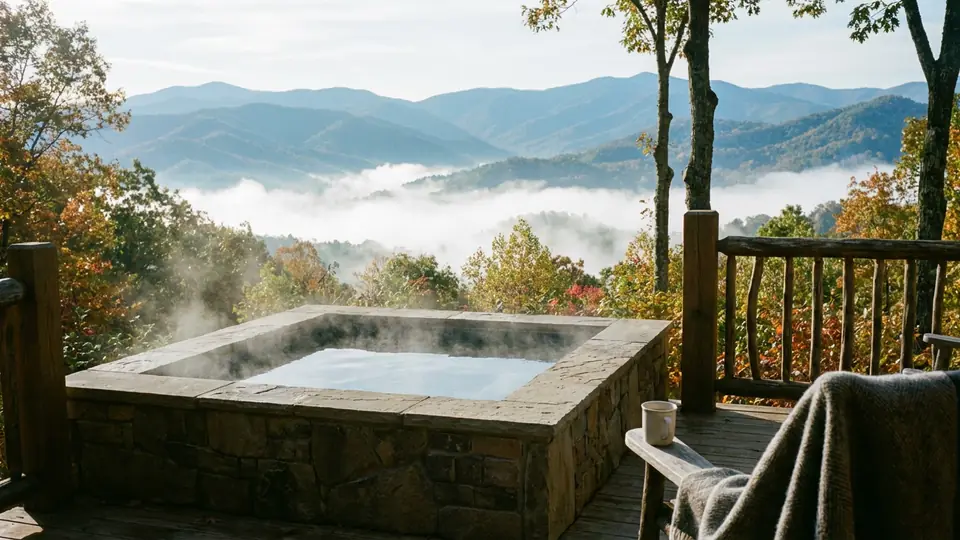
You almost did not do this. The Poconos tab is still open on your phone, a cabin with a hot tub on the deck and a three-hour drive through Pennsylvania you have made twice before. Your partner is driving. The Garden State Parkway narrows past Exit 63 and the strip malls fall away and something happens to the light. It goes wide. The Pine Barrens press in on both sides, a low green wall of pitch pine and scrub oak, and then the trees thin and the air tastes different. Salt. Not ocean yet. Just the memory of ocean, carried inland on a south wind.
You put your phone down.
The shore towns start to have names you recognize from childhood: Egg Harbor, Somers Point, the long bridge over the Great Egg Harbor Bay where the water flashes silver in the late-afternoon sun. You are heading to the bottom of the state, to a town built before the Civil War. Someone told you the mansion on Ocean Street takes only adults and the jacuzzi suite has lace curtains. You thought: fine. One night. We will see.
Cape May
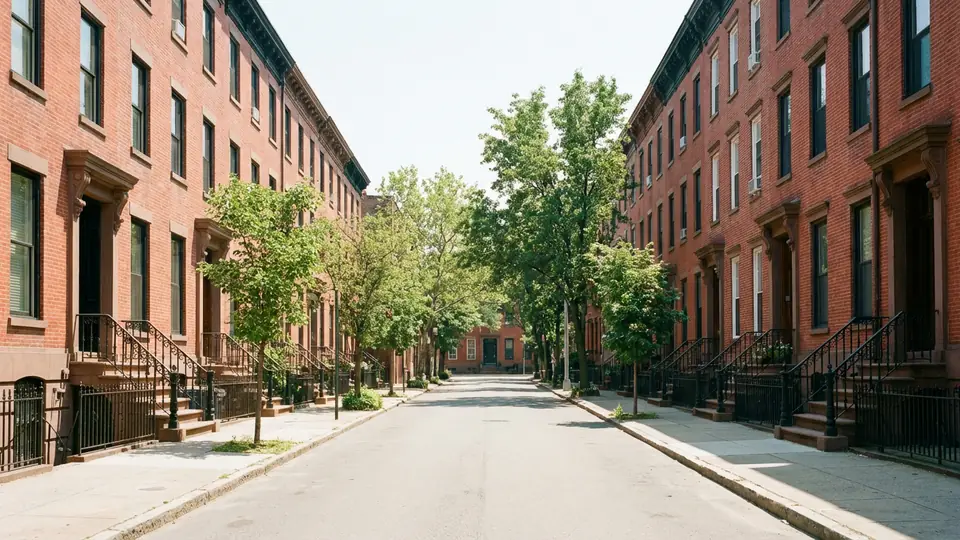
The Wilbraham Mansion sits on a corner lot in the historic district, a three-story Victorian painted in colors that would look absurd anywhere else but here just look correct. Cream and sage. A wraparound porch with wicker chairs and no one under thirty sitting in them. That is the first thing you notice: the absence of children. Not because you dislike children but because their absence changes the acoustic signature of a building. The hallway is silent. The staircase creaks under your weight and under nothing else.
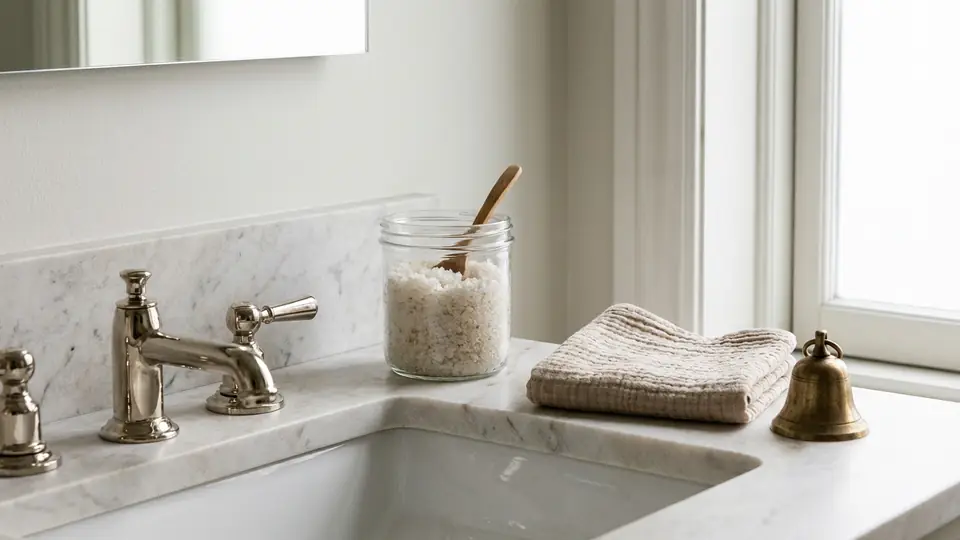
Your suite is on the second floor. The walls are papered in a pattern you would call "grandmother's house" if your grandmother had taste this deliberate: deep florals, not fussy, chosen. A four-poster bed faces the window. The jacuzzi sits in the bathroom, a wide jetted tub framed by white tile and a pane of glass that lets in the last of the afternoon through curtains so fine they turn the light into gauze. You run the water. The jets hum to life, a low vibration that fills the small room and mixes with the silence of the house until you cannot tell where one ends and the other begins.
Cape May in the early evening is a town that has decided not to rush. The restaurants on Washington Street are a five-minute walk, but you do not go. Not yet. There is an indoor pool downstairs that you have, at this hour, entirely to yourselves. Your partner floats on their back while you sit on the tile edge and watch the water ripple against the windows. Afternoon tea waits in the parlor upstairs: small sandwiches and scones on china that predates both of you by a century. A full breakfast comes in the morning, the kind where someone asks how you take your eggs and brings them to a table set with cloth napkins.
You know Cape May. Or you thought you did. You have been here on a Sunday in July, parking six blocks from the beach, eating ice cream on the promenade with sand in your shoes, leaving before dinner. That Cape May is a day trip. This one, the one that exists after the families leave and the porch lights come on and the mansion settles into its own quiet, is a different town. The ocean is one block south, close enough to hear if you open the window. The air that comes in tastes of salt and the cedar shakes of a house that has been standing here since before the war.
If the shore is what draws you and you want it even quieter, Ocean City is twenty minutes north. The Mansion on Central Avenue has whirlpool tubs and antique furnishings and the kind of Victorian detail that makes you whisper without being asked. It is a dry town, which means dinner is BYOB and the evenings are still. Some couples prefer that silence. You note it and keep driving.
North on the Parkway
Forty-five minutes. That is all it takes to change the state entirely. You pass the Cape May tollbooth and cross the bridge over the salt marshes, where egrets stand in the shallows like white punctuation marks. Then the Parkway straightens into a flat, unremarkable corridor of southern New Jersey that exists to be driven through. The shore towns thin out on your right: Avalon, Sea Isle City, Margate. Their water towers shrink in the mirror. Ahead, the sky brightens. Not sunlight. Something electrical. You are heading toward the last place you would book a romantic weekend, and the signs are already announcing it: Atlantic City, 12 miles. Atlantic City, next right.
Atlantic City
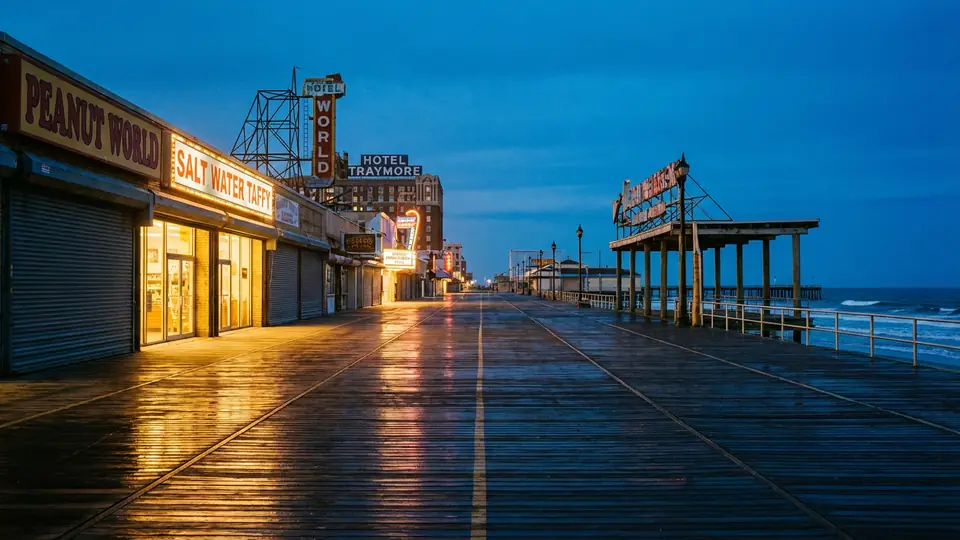
Here is what you know about Atlantic City: bachelorette parties, buffets, a boardwalk that smells like funnel cake and sunscreen, slot machines chiming from every open door. You know the Saturday-night version. Everyone does.
You are here on a Wednesday.
The Hard Rock Hotel rises from the Boardwalk at the spot where the Taj Mahal once stood, which is either poetic or ironic depending on how you feel about casinos named after mausoleums. The tower is tall enough that by the time the elevator opens on your floor, the Boardwalk below has become a ribbon of light, narrow and far away. The ocean beyond it is black and enormous and makes no sound through the glass.
The suite has a freestanding soaking tub positioned near the window. Not tucked into the bathroom. Near the window. Someone in the design department understood that the point of a tub in Atlantic City is not the water you are sitting in. It is the world you are looking at. You fill it. The water rises around you. Below, the Boardwalk lights pulse in their own slow rhythm: amber, white, amber. The ocean is out there beyond them, patient, unchanged by the electricity onshore.
Mid-week Atlantic City is a city that belongs to the people who live there. The restaurants are open but unhurried; your server remembers your name on the second visit. The spa takes walk-ins because there is no line. The concert venue has a show listed on the marquee, but the lobby is not packed three deep and no one is shouting over anyone else. You walk the Boardwalk after dinner and the boards sound hollow under your feet, a wooden drum played by two people instead of two thousand. The salt air is the same salt air as Cape May, forty-five minutes south, but it tastes different here. Sharper. It mixes with something warm and metallic, something that smells like the inside of a building where people come to test their luck.
You go back to the room. Your partner is already in the tub, chin just above the waterline. The Boardwalk light paints the ceiling in slow, moving stripes. You get in. The casino floor is twenty stories below you and it might as well be in another building. Up here, Atlantic City is just water and glass and the low hum of a city resting between weekends.
Into the Pines
Twenty minutes west on the White Horse Pike and the world changes so completely that you check the mirror to make sure Atlantic City was real. The road narrows. The shoulders vanish. The trees, which had been decorative along the Parkway, become structural: pitch pines so dense and so uniform they form a corridor, green-black even in daylight. The light itself drops by half. You have entered the Pine Barrens, a million acres of forest in the most densely populated state in the country, and you have never met anyone who came here on purpose.
Galloway
The Fairway Villas sit at the end of a resort road lined with golf-course grass so manicured it looks painted. The building is not what you expected. It is not a hotel. It is a villa: a full living space with a kitchen and a living room and a bedroom where the tub sits not behind a bathroom door but in the room itself, freestanding, facing the window. Outside that window: pines. Nothing else. No streetlights. No neighboring roofline. No sound except what you make.
The website shows families at the pool. The photographs emphasize square footage and granite countertops. Nothing about it says: come here with the person you love and sit in warm water in the dark and listen to nothing.
But you are here. The tub is filling. The pine darkness outside the window is so complete that the glass becomes a black mirror, reflecting the room back at you: warm, lit, small against the scale of the forest. Your partner turns off the overhead light. Now the room is lit only by the glow from the hallway, a thin blade of yellow that reaches the foot of the bed and stops. The water is warm. The pines are silent. Twenty minutes east, the Boardwalk is still pulsing its amber rhythm. You cannot hear it. You cannot see it. It might as well be in another state entirely.
You came to New Jersey for the shore and the skyline. Between them, you found a room in the woods where the only sound is water against porcelain and your own breathing.
The Parkway North
Morning. The villa is quiet and the pines are wet with a dew that will not burn off for hours. You get back in the car.
The Parkway starts in the Pine Barrens, threads through the center of the state where every exit leads to a town with a Main Street and a pizza place. Then it hits the industrial stretch near Rahway. The air thickens with jet fuel and ambition. The refineries catch the sun on their metal skins. Container ships sit in the port like buildings tipped on their sides. Planes descend into Newark so low you can read the airline printed on the fuselage.
Past the toll plaza, the road curves east and the Hudson River appears. And across it, every building you have ever seen in a movie. Every tower you have ever pointed at from an observation deck. Right there, across a mile of gray water, close enough to count the cranes on the rooftops.
You do not cross the river. You take the Jersey City exit.
Jersey City
The Hyatt Regency sits on the waterfront at Exchange Place, where the PATH trains surface and the ferry terminal faces Manhattan like a front porch facing the street. The lobby is marble and glass and hushed. The elevators face west, toward the state you just drove through. But the room faces east. You open the door and the window is floor-to-ceiling and the window is Manhattan.
Not a piece of it. Not a sliver between buildings. The entire thing. The Freedom Tower, its antenna catching the last direct sun. The glass boxes of the Financial District. The piers. The ferries tracing white lines on gray water. It is so close and so complete that it feels like a projection mounted behind the glass, except that the light is changing. A cloud crosses and the towers shift from silver to pewter in a single breath, and then the cloud passes and they flash bright again.
The freestanding tub faces the window. You fill it, lower yourself in, and the city is right there, silent behind double-paned glass, performing its evening for an audience of two.
The blue hour arrives. You know it when it comes: that window of twenty minutes when the sun is below the horizon but the sky holds its light, and every building turns amber at the base and steel-blue at the crown. The river goes dark. Apartment lights appear one by one, floor by floor, like a city remembering it is inhabited. Your partner's shoulder is against yours in the tub. The water is cooling slowly. Neither of you reaches for the drain.
You are in New Jersey. The place you thought you wanted to be is right there, across a river you have no desire to cross. It is beautiful from here. It has never been more beautiful than from here.
Morning
In daylight, the view is ordinary. Just buildings. The romance was in the light, not the architecture, and the morning sun is honest and democratic and reveals that Manhattan is mostly glass and concrete and air-conditioning units on rooftops. You do not mind.
You are drinking coffee at the window, both of you, and the state is behind you. South, all the way down the Parkway: Cape May at the bottom with its porches and its lace; the Boardwalk somewhere in the middle, setting out its chairs; the pines between them, still wet, still silent. The car is in the garage downstairs. The Parkway would take you home in an hour. It would take you back to any of the four rooms in two.
You are not in a hurry to start it. You are not in a hurry to cross the river. You are drinking coffee in New Jersey, looking east, staying.