The hotel industry uses "private hot tub" to describe setups that share almost nothing beyond heated water and jets. The setup dictates the rules. A jetted tub sealed inside a tiled bathroom follows different noise and social rules than a 400-gallon spa tub on a third-floor balcony. A balcony tub has nothing in common with a cedar-decked whirlpool at a standalone cabin forty feet from the nearest neighbor. Yet booking pages use the same two words for a $129 roadside suite and a $650 mountain lodge. Guests have no reliable way to know what they booked, what the real constraints are, or which behaviors will generate a noise complaint, a cleaning fee, or a conversation with the front desk. The guest who understands the setup before check-in never has a problem.

"Private" Has Three Meanings
Consider running the jets at 11 p.m. on a Saturday. In a hotel room with an enclosed jetted tub set into a tiled alcove, this is a non-event. The walls absorb most motor noise. No one outside the room knows or cares. Move that behavior to a balcony spa tub at a boutique hotel in Asheville or Sedona, and the outcome reverses. Jet motors on exterior-mounted tubs produce 60 to 70 decibels at the source, roughly equivalent to a running dishwasher. Balcony partitions do nothing to block that sound. The couple next door hears it. If they call the front desk by 11:15, the posted quiet hours become relevant fast.
Move the same behavior to a private cabin with a deck-mounted hot tub and twenty yards of mountain air between properties. Nobody hears it. Nobody cares. There are no quiet hours because there is no one to be quiet for. Three setups, three outcomes from identical behavior. The etiquette is not about the behavior. It is about the architecture.
Hotels have no incentive to clarify this on booking pages. A hot tub jacuzzi hotel listing generates clicks regardless of whether the tub is behind a bathroom door or exposed on a terrace. The guest decodes the physical reality from photos. Most are carefully angled. Some use a wide lens that makes a 48-inch soaking tub look like a plunge pool. Expectation and experience diverge, and that gap is where etiquette problems start.
The In-Room Jetted Tub: The Most Forgiving Setup
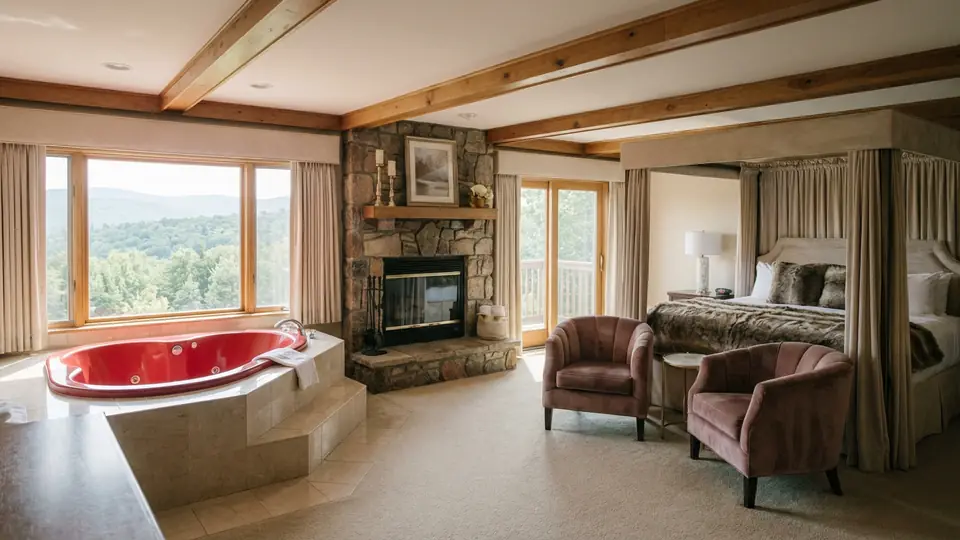
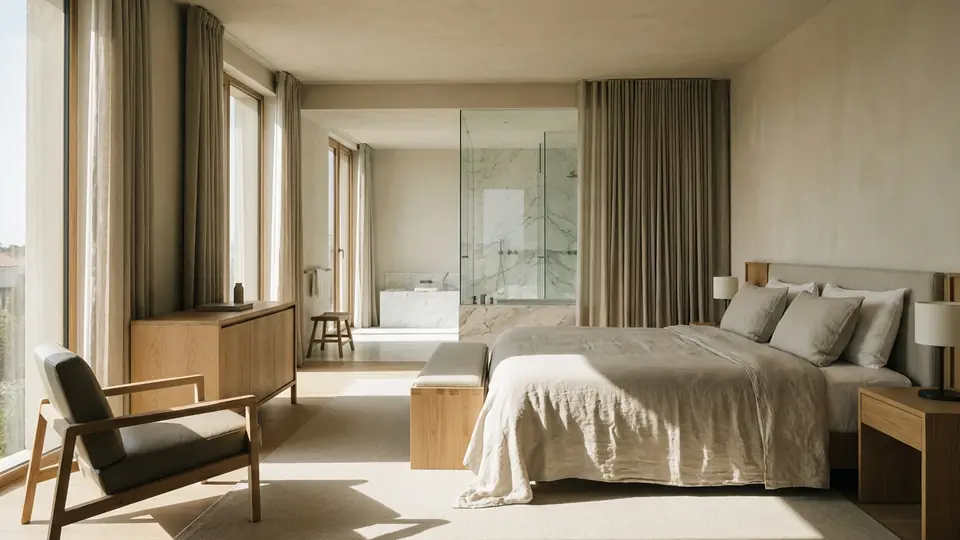
The in-room hot tub, whether set into a bathroom alcove or positioned in the bedroom itself, forgives more acoustic sin than any other hotel tub setup. Enclosed walls, tiled surfaces, and the room's own HVAC system make jet operation invisible to adjacent guests. I have run jetted tubs past midnight in dozens of hotel rooms across the Southeast and Midwest without once generating a complaint, and I attribute that entirely to physics rather than luck.
The typical in-room jetted tub produces between 55 and 65 decibels measured at one meter from the unit, but standard hotel wall construction with 5/8-inch drywall on staggered studs (wall frames that do not touch) reduces transmission to neighboring rooms by 40 to 50 decibels, bringing audible bleed to near-ambient levels.
Properties in the $130 to $250 range most commonly feature this configuration. Most hotels with hot tub in room do not post hours for tub use because the acoustic profile does not require them. The guest is operating a bathtub with a motor. No front desk has ever called a room to ask someone to stop taking a bath.
The single genuine risk with a hot tub inside a hotel room is water management. Units positioned in carpeted bedroom areas rather than fully tiled bathrooms are vulnerable to splash damage. Fees for water on non-tiled surfaces range from $150 to $500 depending on the property and the extent of the damage. Keep the jet intensity moderate and do not fill above the overflow line. Water management is the guest's job.
The typical in-room jetted tub produces between 55 and 65 decibels measured at one meter from the unit, but standard hotel wall construction with 5/8-inch drywall on staggered studs reduces transmission to neighboring rooms by 40 to 50 decibels, bringing audible bleed to near-ambient levels.
Balcony and Terrace Tubs: More Visible Than You Think
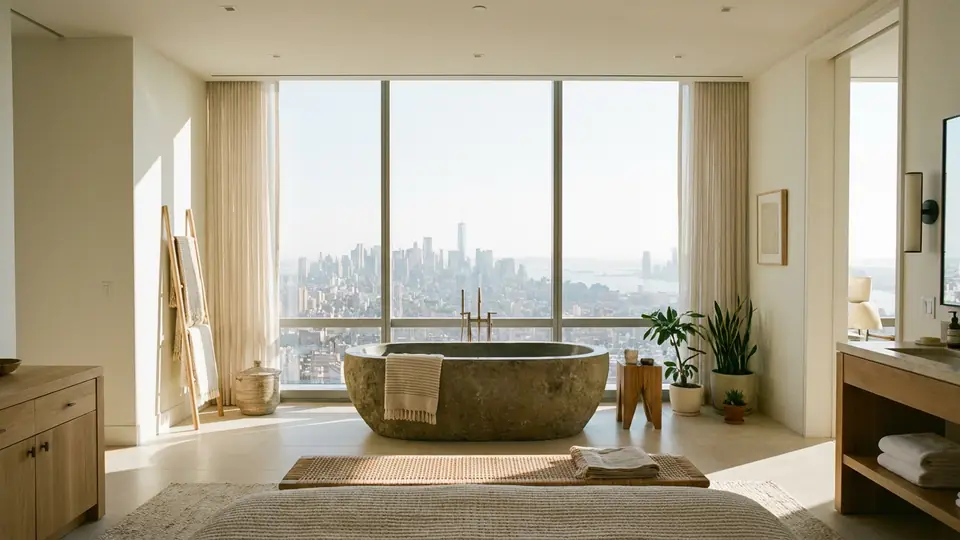
The balcony-mounted spa tub is the most misunderstood configuration in the hotel market. Guests book it for the view and the open air. What they miss is that "private balcony" is an architectural description, not an acoustic one. Sound travels horizontally across balcony partitions with no meaningful attenuation. It travels vertically between floors with even less. A normal-volume conversation on a balcony at 10 p.m. reaches every occupied room within two floors. Add a jet motor and both parties lose, the tub user and the neighbor.
Sight lines compound this. At properties where balcony partitions are waist-height glass or decorative metalwork, "private" collapses. I have stayed at properties where the hot tub on my terrace was visible from the parking lot, the pool deck, and the balcony directly across the courtyard. The listing described hotel rooms with private hot tub access and a "jacuzzi terrace." The physical reality was a semi-exposed platform with partial screening.
Properties with balcony-mounted hot tubs are three to five times more likely to post explicit quiet hours for tub use than properties with interior jetted tubs, with 10 p.m. or 11 p.m. cutoffs being the most common restriction in urban and suburban settings.
This does not make balcony tubs a poor choice. The guest who wants a late-night soak with jets running should not book a balcony whirlpool with shared walls and posted quiet hours. The guest who wants a morning soak with mountain views and no jet operation will find the setup ideal. The distinction is use-case alignment.
Resorts designed with balcony tubs from the ground up handle the acoustic problem at the architectural level, with generous spacing and solid masonry between rooms. The price premium runs 30 to 40 percent above comparable rooms without the tub, and at well-designed properties, the premium reflects real engineering.
Cabin and Cottage Hot Tubs: Freedom With Fine Print
The standalone cabin or cottage with a deck-mounted hot tub comes closest to the fantasy of "private." Setback distances of 30 to 100 feet between properties eliminate noise concerns. No shared walls, no partitions, no hallway transmission. The guest who wants to run a whirlpool at 2 a.m. while watching the stars can do exactly that without a moment of social anxiety. It delivers on noise and privacy.
The fine print is different in kind from hotel fine print. Cabin properties, particularly those managed by independent rental companies, shift tub maintenance responsibility to the guest. Chemical balance instructions appear in the welcome binder, and the liability framework positions the guest as a temporary operator rather than a passive consumer. Damage deposits reflect this: where a standard hotel holds $50 to $100 for incidentals, cabin properties with hot tubs routinely hold $250 to $500.
Independent cabin rental properties charge damage deposits averaging $300 to $500 per stay, with spa tub chemical treatment or drain-and-refill fees accounting for $75 to $150 of the total when separately itemized.
Maximum freedom, maximum privacy, higher financial exposure. For experienced tub users, this is the least stressful configuration. For first-timers, the maintenance expectations can introduce exactly the anxiety the booking was supposed to eliminate.
Resort Hot Tubs: "Private" Beside the Pool Deck
A jetted tub on a resort suite patio, ten feet from the common pool area and within earshot of the tiki bar, is private only in the sense that it is billed to your room. The tub operates within the resort's public-area policies: posted hours, capacity limits, noise restrictions, sometimes a requirement to shower before use.
This configuration carries the most rules, for good reason. Resorts manage noise by managing behavior. A tub next to the pool deck creates problems an enclosed bathroom tub never will. Hours are posted because sound from the patio reaches the pool. Capacity limits exist because the tub is visible to other guests and staff.
For certain guests, this is the right pick. Families benefit from the structure that posted rules provide. First-time tub users benefit from explicit expectations. The guest trades freedom for clarity. Plenty of travelers prefer that deal.
What Hotels Post vs. What They Enforce
Hotels post tub rules they rarely enforce. Most properties with in-room whirlpool tubs list quiet hours as general policy, but enforcement against in-room tub use during those hours is nonexistent. Front desk staff respond to complaints, and in-room tubs rarely generate them.
Chemical and cleaning fees appear in terms of service but function as insurance clauses. Hotels invoke them when there is visible damage, not as a routine checkout item. Charges are triggered by three events: staining from bath oils, hair dye, or red wine; overflow damage to flooring or furniture; and unauthorized guest access to resort-adjacent tubs. Outside these triggers, posted policies are aspirational. The actual risk profile is lower than most first-time guests assume.
Three Questions Worth Asking at Check-In
Ninety percent of tub-related guest anxiety resolves in two minutes at the front desk. Three questions do the work.
First: are the jets audible from adjacent rooms? Staff at properties with in-room spa tubs answer this honestly. They have received the complaints when the answer is yes.
Second: is there a cutoff time for tub use? At properties with exterior or balcony-mounted tubs, the answer is nearly always yes. Knowing the hour prevents the 11 p.m. call from management.
Third: are there extra cleaning or chemical fees? Usually no for hotels, sometimes yes for cabin rentals. Asking surfaces the policy before it becomes a surprise on the bill.
The information is not hidden. It is simply not volunteered, because hotel training prioritizes the check-in experience over preemptive policy disclosure.
Noise at Night: What the Walls Tell You
A jetted tub at full power produces 60 to 70 decibels at the source. Whether that sound reaches the next room depends on wall construction, the tub's position relative to the shared wall, and whether the tub sits on a concrete slab or a raised platform. Modern hotel construction with concrete-core walls attenuates transmission effectively. A jetted tub against an exterior wall in a concrete building is functionally silent to neighbors. Older motor lodge construction with single-layer drywall transmits significantly more.
The heuristic is simple: if hallway conversation is clearly audible from inside the room, neighbors will hear the jets. If the room is isolated from hallway noise, it is isolated from tub noise. Test this within thirty seconds of entering. Raised platforms amplify the problem by transmitting vibration through the floor structure, and that low-frequency component carries farther than motor noise. Ground-floor rooms with slab-mounted tubs are the quietest configuration for late-night use.
Match the Setup to How You Will Use It
For a late-night soak with jets running and no anxiety about noise, book a hotel with hot tub in room, one with interior-mounted units and tiled surrounds. Whether it is a romantic hotel room with hot tub or simply a midnight wind-down, this is the most forgiving configuration. Hotel suites with hot tub in the $140 to $280 range deliver this consistently. The only rule that matters is keeping water off the carpet.
A morning soak with a view, jets optional: a balcony or terrace tub at a property with solid construction and spacing between units. Expect quiet hours after 10 p.m. The view is the product, not the jet system.
All-hours, no-rules privacy: a cabin or cottage with a deck-mounted hot tub. Accept the higher deposit and possible maintenance responsibility. This is the only configuration where "private" means what the word actually means.
A structured family trip with clear expectations: book a hotel with pool and hot tub at a resort, choosing a suite with a patio-adjacent spa. The posted hours and capacity rules remove ambiguity, and for families or first-time tub users, that clarity is the point.
The etiquette is architectural, not complicated. Book the right setup for the right purpose, and the three check-in questions handle the rest.