The Question
You have had the conversation before. Sunday, the couch, a phone open to somewhere. One of you says: let us go. The other says: where? And the planning stalls on that word, because the room you want is simple enough. A tub. A door that locks. Each other. That part does not change. What changes is the country outside the window.
A hot tub on a Gulf Coast balcony at sunset is not the same evening as a hot tub in a New England inn while snow buries the mountains. The water is the same temperature. The room is the same size. But the evening is different in your body, in the sounds that reach you, in what the dark looks like when you finally turn out the light. Six evenings, strung from the warm coast to the frozen village. The choice is not about the room. It is about what the room lets in.
Gulf Coast: Fort Myers Beach
You land in Fort Myers in the late afternoon, and the air is immediate. It is on your skin before you reach the car, salt and warmth and the particular weight of coastal Florida in the hours before sunset. The drive to Fort Myers Beach takes twenty minutes across a causeway where the water is flat and silver on both sides. Then you are on the island, and the sky is turning the color of a ripe peach along the horizon.
Pink Shell Beach Resort sits where the beach meets a working marina. There are pelicans on the dock pilings. A dolphin surfaces near the fuel station and no one looks up, because this happens here every day. Your room is upstairs with a wall of glass and a private balcony, and on that balcony is the hot tub, and beyond it is the Gulf of Mexico turning amber.
You get in before dinner. The water is hot against skin still warm from the airport walk, and the salt air comes over the railing in slow pulls. A shrimp boat is heading back toward San Carlos Island. Below you, someone is hosing down the deck of a charter boat while a radio plays something with horns. The sun does not set here so much as dissolve, going from orange to pink to a bruised purple that lasts twenty minutes longer than you expect.
Nothing is enclosed. The Gulf stretches past the balcony railing and does not stop, and the tub is the warm center of a wide, salt-heavy world. You stay in until the stars show up, which takes a while this far south, and by then you are too relaxed to care about the restaurant reservation. You order room service and leave the balcony door open all night.
Desert Southwest: Albuquerque
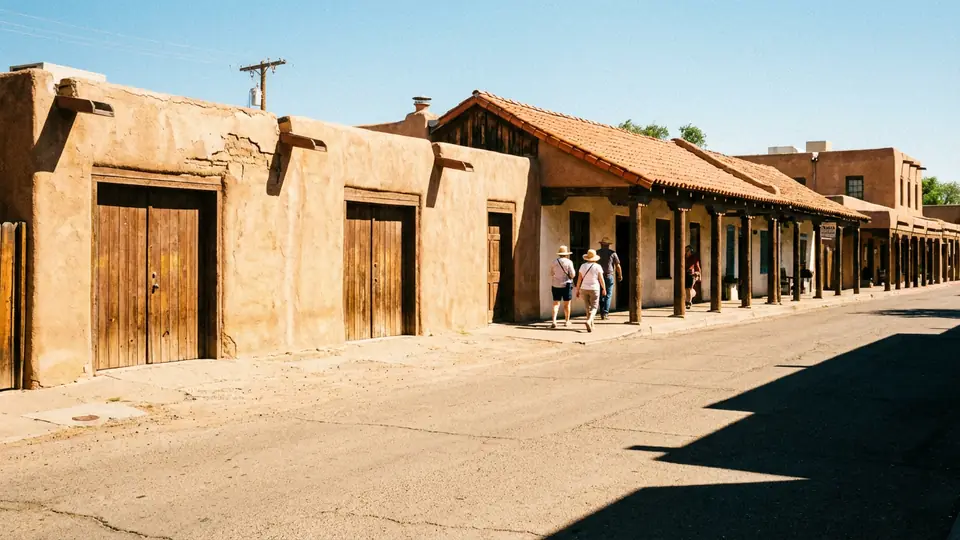
The fountain is the first thing you hear. Not the front desk, not the courtyard gate closing behind you. A low stone basin somewhere in the garden, filling the silence with a sound like a slow, permanent exhale. Casas de Suenos was built in the 1930s, a cluster of casitas set through grounds that feel both deliberate and wild. The walls are thick. The ceilings are vigas and latillas, the crosshatched wood beams that have been keeping New Mexico buildings cool for four hundred years. There is a fireplace. There is a private hot tub. And Old Town, two blocks east, is still glowing with the last of the day.
You walked through it on the way in. The church at San Felipe de Neri has been standing since 1793. The plaza around it smelled like roasting green chile and candle wax. The late sun was turning the adobe the color of raw honey.
At night, the garden compresses. The walls of the casita, the walls of the courtyard, the low branches of the trees: everything draws in. You are in the hot tub with the stars directly above you, more of them than you have seen in years. The city is small. The desert is close. The altitude puts you a mile nearer to all of it. The fountain is still going. The fireplace inside is still lit, its light visible through the window. Old Town is quiet now. The couple at the next casita has gone inside.
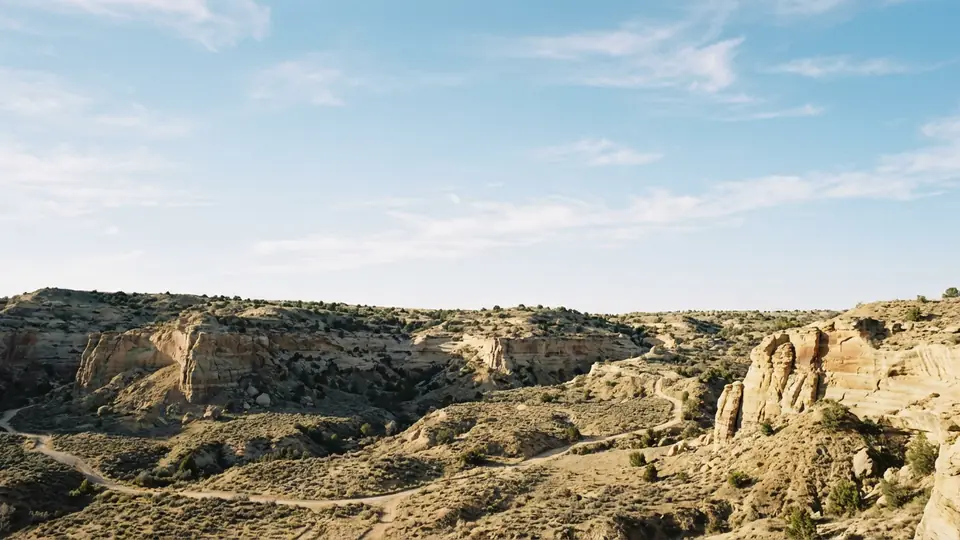
The desert takes the heat of the day and gives back cold. You feel both at once: the water on your shoulders, the November air on your face. The fountain keeps its rhythm. You do not go in for a long time.
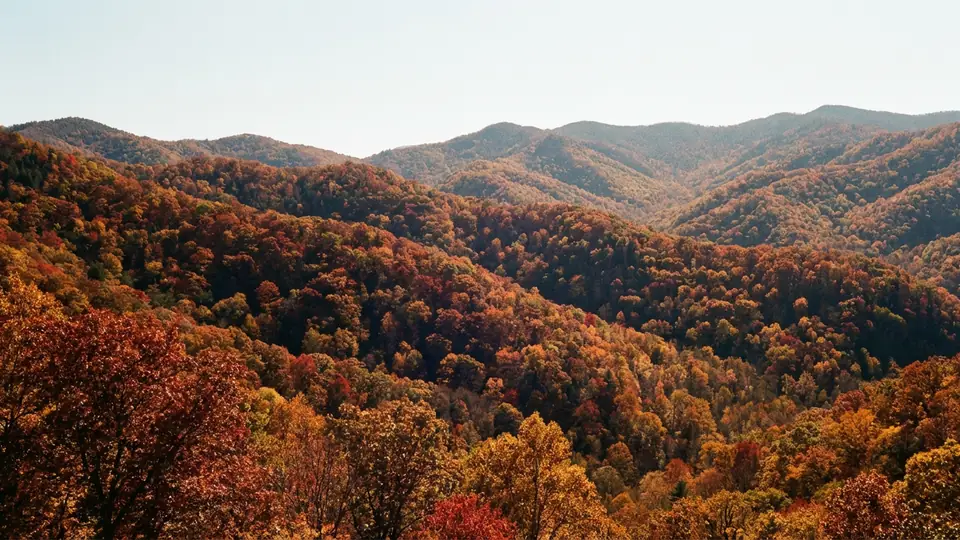
The Smokies have closed around this bend in the river, and the evening belongs to you and the water.
Smoky Mountains: Pigeon Forge
The drive from Knoxville takes forty minutes on a road that narrows as the mountains close in. You pass Sevierville and the franchise strip, the go-kart tracks and pancake houses, and then the road bends and the river appears and the noise stops. River Cottage Psalm 23 is on a stretch of the Little Pigeon River where the water runs clear over smooth rocks and the tree canopy is thick enough to lower the temperature five degrees.
The cottage is for two people. Not "sleeps two" in the way that means four could manage. Built for two. A custom kitchen scaled to a couple who will cook one meal and eat it slowly. No television visible from the front door, because the cottage has decided for you: tonight is not a screen night. And outside, close enough to the river that you can hear individual rocks in the current, the hot tub.
You get in after dark because that is when this place does its work. There are no streetlights on this stretch. No neighboring cabins with porch lamps. The mountain dark is not empty but full, the trees and the ridge and the river all present but invisible. You can hear the water below you, cold Smoky Mountain runoff heading toward Gatlinburg. You can feel the water around you, 104 degrees and still. A bird calls from somewhere upstream. Something moves in the underbrush, unhurried, uninterested in you.
The tub holds two people. The river is a stone's throw away. The cottage behind you has one bedroom. The mountains are enormous and indifferent, and you are very small in them, and the smallness feels like relief. Nobody is looking at you. Nobody knows you are here. The mountains have closed around this bend in the river, and the evening belongs entirely to you and the water.
Pacific Northwest: Richland
Richland, Washington sits where the Yakima River meets the Columbia, in a valley of basalt and vineyards and afternoon light that photographers call golden hour stretched to three. The wine country here is not Napa. There are no buses of tourists. There are tasting rooms in converted warehouses and winemakers who will pour for you and your partner at a counter and forget to charge for the third glass.
The Lodge at Columbia Point is on the river, which is the first thing and the last thing about it. The Columbia is wide here, not the dramatic gorge of its western stretch but a broad, calm, gunmetal body of water that fills the floor-to-ceiling windows of your room. The freestanding tub sits in the room itself, not on a balcony, not behind a bathroom wall. It is right there, between the bed and the river. When you are in it, the water in the tub and the water in the window are the same grey.
You do not go outside. You do not need to. The restaurant is downstairs, and the wine list is local. After dinner you take the elevator back up and run the bath and watch the Columbia do what it does, which is move without seeming to move. A barge passes, lit up, heading east. The opposite bank is low and dark. A heron stands on something you cannot see.
The grey light here does something to time. It slows it without announcing the slowdown. You realize you have been in the tub for forty minutes only because the water has cooled and the barge has disappeared. Wine country without the performance: no reservations, no designated driver, no standing in a crowded room pretending to taste pencil shavings. Just the river and the wine and the tub and the quiet.
Northern Rockies: Butte
Butte is a mining town on a hill in southwest Montana. The headframes of the old copper mines stand on the skyline. The Berkeley Pit, an open-pit mine filled with toxic water, is a Superfund site that charges admission. You might wonder what this town is doing in a piece about hot-tub evenings.
The Copper King is what it is doing here. William Andrews Clark built this mansion in 1884 with money pulled from the ground beneath your feet. The building carries that history in every surface: carved oak staircases, stained glass that throws colored light at certain hours, pressed-tin ceilings. The freestanding tub sits in a marble bathroom designed by a man who wanted his house to prove that civilization had arrived in Montana. It had not, entirely. But the bathtub argued otherwise.
You run the water and the marble warms under your hands. The bathroom is high-ceilinged and quiet. Through the window, Butte's uptown district is visible, its brick buildings and neon signs and the ridge of the Continental Divide beyond. Somewhere in this building is a ballroom. Somewhere is a library paneled in Honduran mahogany. You are in a copper baron's bathroom with hot water and someone you love, and the dissonance between the rough town outside and the ridiculous luxury of this room is the entire point.
This is the unexpected version. Every other evening in this journey puts you in a place that makes immediate sense for a couples' weekend. Butte makes no sense until you are standing in it. The evening here has weight. It has the texture of a building that has survived its own history, converted from monument to hotel, its grandeur intact and slightly absurd and entirely persuasive. You came here because no one told you to. That turns out to be the best reason.
New England: Jackson, New Hampshire
You arrive in Jackson in the early dark of December, which in northern New Hampshire means 4:15 in the afternoon. The village is a covered bridge and a white church and a general store and not much else. The snow on the ground is not decorative. It is the kind that stays until April. The White Mountains above the valley are invisible because the clouds are sitting on them.
The Wentworth is a village inn in the way that phrase used to mean something. It has been here since 1869. The porch wraps around the building. The dining room has white tablecloths. Your room has a freestanding tub positioned near the window. The window faces the mountains you cannot see tonight but will see in the morning, when the clouds lift and the Presidential Range appears, enormous and white.
You eat dinner downstairs. The menu is New England without apology: chowder, bread, something with local cider, something with butter. The dining room is warm and half full and quiet. Afterward you climb the stairs and run the tub and stand at the window for a moment before getting in. The village is dark. A single streetlight illuminates the snow falling past it. The covered bridge is out there somewhere.
The water is hot. The room is warm. The window is cold to the touch if you reach for it, and you do, once, just to feel the difference. December in the White Mountains is not gentle. It is not quaint. It is enormous and serious and dark at four in the afternoon, and the hot water in this old inn is the answer to a question the mountains pose every winter.
The window goes black. The mountains are out there. The snow is doing what it does.