Your body after six hours in transit
Six hours in an economy seat produces 10 to 15 millimeters of disc compression along the lumbar and thoracic spine. Prolonged sitting starves the intervertebral discs of the fluid circulation they need to absorb shock. Cortisol rises during travel, driven by terminal logistics, time pressure, and the low-grade alertness of unfamiliar environments. Cabin air dehydrates soft tissue. Circadian signaling fractures with even one time zone crossed. The body, upon checking into the hotel, is compressed, chemically agitated, and running on a clock that no longer matches the local one. A good mattress does not address the compression, the cortisol, or the vascular stagnation. The most effective tool for reversing all three simultaneously is the hot tub.

Minutes one through five: the vascular reset
Immersion in water between 100 and 104 degrees Fahrenheit triggers an immediate vascular response. Within ninety seconds, blood vessels near the skin surface dilate, redirecting circulation toward extremities starved during hours of sitting. Heart rate increases by 10 to 20 beats per minute. The cause is not exertion but hydrostatic pressure: the weight of the water compresses the body's surface uniformly. The cardiovascular system responds by working harder to move blood through a slightly altered pressure gradient.
That framing contradicts the popular notion of hot tub health benefits as passive relaxation. The body does not read hot water as rest. It reads hot water as a cardiovascular event, closer in physiological signature to a moderate walk than to lying down. Blood pressure rises slightly, then drops as vasodilation takes full effect. Within five minutes, the circulatory system reverses the pooling and stagnation of transit. A 20-minute hot tub session increases peripheral blood flow by up to 30 percent, a vascular response comparable to light aerobic exercise without the joint impact.
In a jetted tub, this effect intensifies. The mechanical action of water jets against the skin adds localized pressure variation, creating micro-fluctuations in blood flow that still water cannot produce. A traveler settling into a Gold-tier property with a well-configured whirlpool is not warming up. The cardiovascular system is already recalibrating.
Minutes five through fifteen: the deep cascade
The shift happens around the six-minute mark. The body's fight-or-flight mode, running hot since the 5 AM alarm, finally downshifts. Cortisol levels begin to drop. Heart rate, after its initial increase, settles into a rhythm typically lower than the traveler's pre-immersion resting rate. This is the parasympathetic cascade — the nervous system's shift from alert mode to recovery mode — and it is the phase where the therapeutic value of the soak separates from a quick rinse in warm water.
The tension receptors in muscle fibers start to let go around the six-minute mark. The muscles along the thoracic spine, locked in a shortened position from hours of sitting, begin to lengthen. Buoyancy contributes a second mechanism: in water, the body's effective weight drops by roughly 90 percent. The intervertebral discs that compressed during travel begin to rehydrate and decompress. The spine, over this ten-minute window, is doing what eight hours of sleep would only partially accomplish.
The final five minutes and what happens after you get out
The last five minutes of a properly timed soak serve a purpose that has nothing to do with relaxation in the moment. Core body temperature, rising steadily throughout immersion, reaches a point 1 to 2 degrees Fahrenheit above baseline. This elevation triggers a thermoregulatory process that begins after the bather exits the water. The body registers the elevated core temperature and initiates a cooling cascade. Over the following 60 to 90 minutes, core temperature drops below its normal resting level.
This temperature drop is one of the strongest natural signals for melatonin production. Research published in Sleep Medicine Reviews found that a warm bath 90 minutes before bed reduced sleep onset latency by an average of 36 percent and increased deep-sleep duration, with optimal water temperature between 104 and 109 degrees Fahrenheit. The traveler who cuts a soak to ten minutes gets the vascular benefit and some muscular release but misses the core temperature elevation that primes the sleep improvement entirely. The final five minutes are not diminishing returns. They are the minutes that produce the sleep benefit.
The implication is timing. A soak that ends at 11:00 PM, with a target sleep time of 12:30 AM, captures the full thermoregulatory window. A soak that ends at midnight, with the traveler attempting to sleep immediately, wastes most of the melatonin priming because the cooling cycle has not yet completed. Hotels with hot tub inside room make this timing controllable as no hotel pool or communal spa can.
Not all hotel tubs do the same thing
The hotel industry labels a wide range of products as "spa suites" or "whirlpool rooms." The variation in what those labels deliver is enormous, and understanding the taxonomy is the difference between paying for recovery and paying for a larger bathtub.
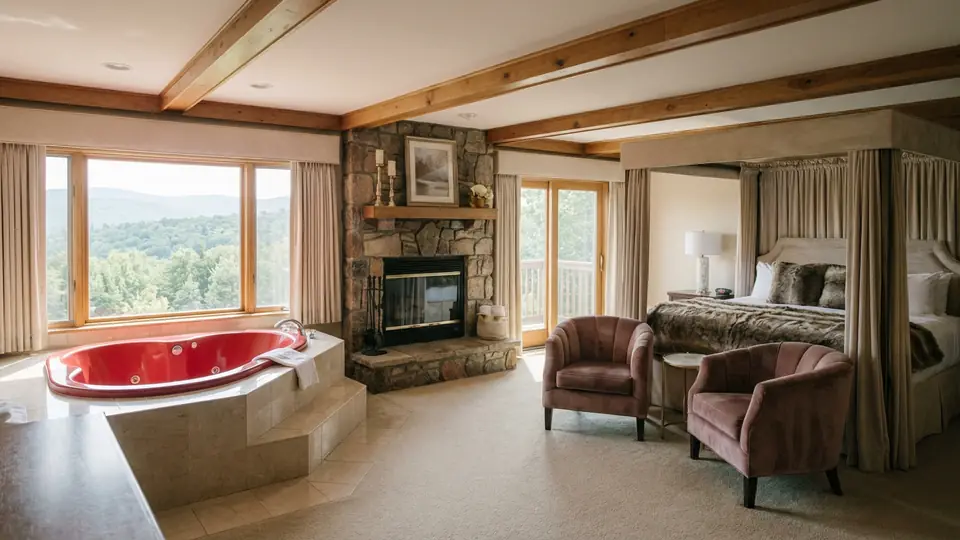
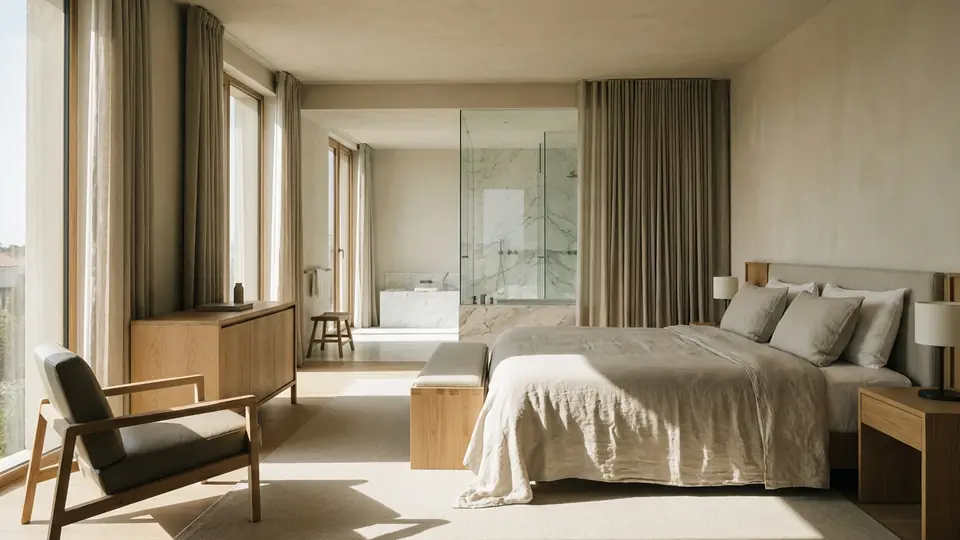
A jetted-enlarged tub, typically found in a dedicated hot tub room, is the most effective recovery tool available in a hotel room. These units hold 60 to 80 gallons, provide full-body immersion, and run pressurized water jets that deliver hydrostatic and mechanical benefit. A jetted-standard tub is smaller, often a retrofit into a bathroom not originally designed for it. The jets work, the water is hot, and the benefit is real, though limited by depth and immersion coverage. A freestanding modern tub, the type favored by boutique hotels for its visual impact? It is almost always a soaking-only unit with no jets and no depth. It photographs well. It does very little for a compressed spine.
The price difference between a standard room and a hot tub room averages $50 to $120 per night across mid-range and upscale American hotel properties, yet the physiological difference between a jetted tub and a standard bathtub is not incremental — it is categorical. Dedicated outdoor hot tubs and balcony installations deliver the best hydrostatic pressure due to their depth and volume, with the added benefit of cooler ambient air that extends comfortable soak time.
Water movement is the mechanism that separates a therapeutic soak from a warm bath. Water pressure pushes pooled fluid from the legs back toward the heart. Swelling drops. Circulation improves. When jet turbulence is added, the localized pressure variation drives circulation deeper into muscle tissue than still water can reach.
Jet placement matters. Back-mounted jets target the muscles most damaged by prolonged sitting. Side-mounted jets address the hip flexors and obliques, which shorten and tighten during travel. Full-body configurations provide the most comprehensive coverage but require a larger tub to work. A small tub with twelve jets produces turbulence without targeted pressure.
The traveler evaluating a jetted tub suite should look for two indicators: jet count relative to tub volume, and whether the property specifies adjustable jet pressure. A system that allows the user to modulate intensity is one designed for use, not for specification sheets. Properties that list "whirlpool tub" without further detail are, in the majority of cases, running entry-level air injection systems that agitate the water surface without producing sub-surface pressure.
Temperature, timing, and the three mistakes people make
The most common error is alcohol before or during the soak. Alcohol is a vasodilator. Combining it with hot water vasodilation produces an additive drop in blood pressure that negates the controlled cardiovascular benefit of immersion. The parasympathetic cascade that drives recovery is blunted. A glass of wine after the soak is fine. A glass of wine during the soak converts a recovery session into a mild cardiovascular stressor.
The second mistake is temperature. Water above 104 degrees Fahrenheit produces diminishing therapeutic returns and introduces risk, particularly for travelers already dehydrated from transit. The optimal range is 100 to 104 degrees. Most hotel in-room hot tubs are factory-set within this range, but communal hot tubs and older jetted tubs occasionally run hotter.
The third mistake is duration. Ten minutes captures the vascular reset and some muscular release but does not produce the core temperature elevation required for the sleep benefit. Fifteen minutes is the minimum threshold for full parasympathetic activation. Twenty minutes captures the thermoregulatory priming. Thirty minutes offers no additional benefit for most travelers and increases dehydration risk. The window is specific, and treating it with specificity is what separates a recovery protocol from a casual dip.
What the upgrade costs
The arithmetic is straightforward. A traveler who pays $30 for extra legroom on a three-hour flight has already demonstrated willingness to spend money on physical comfort during travel. A $45 airport lounge visit buys a quieter chair and a mediocre coffee. A restaurant meal that runs $60 provides forty-five minutes of pleasure and no physiological recovery.
A hot tub room upgrade, at $50 to $80 above the standard room rate in the mid-range tier, improves sleep onset by roughly 36 percent, accelerates muscular recovery, and leaves the traveler sharper the next morning. At the upscale tier, the differential widens to $80 to $150, but the tub quality scales with it: larger units, better jet systems, deeper immersion. The value proposition is not that the hot tub and room upgrade is cheap. It is that the alternatives the traveler is already spending on deliver less recovery per dollar. The in-room jacuzzi is competing with every other discretionary travel expense, and it delivers more recovery than any of them.
The morning soak
The evening soak gets the attention because of the sleep data, but a morning session in a private jacuzzi offers a different set of benefits. A fifteen-minute soak at 100 to 102 degrees produces vasodilation that increases alertness without the jittery spike of caffeine. Joint mobility, particularly in the spine and hips, improves for the first several hours of the day.
A room with private hot tub requires no scheduling, no shared facility, and no swimwear. A balcony hot tub on a property with a mountain or waterfront view turns the morning soak into something the traveler will want to do at 7:00 AM — which is what makes the habit stick. Hotels with personal hot tub setups facing natural light or open air make it a genuine reason to set an earlier alarm. The traveler who uses the tub twice, evening and morning, extracts roughly double the physiological benefit from the same nightly upgrade cost.
How to book for recovery
Twenty minutes in a properly configured jetted tub reverses spinal compression, drops cortisol, resets vascular circulation, and primes the thermoregulatory cascade that produces better sleep than any mattress upgrade alone. The tub types that justify the premium are jetted-enlarged suites, dedicated hot tubs, and outdoor or balcony installations with sufficient depth for full immersion. Standard bathtubs rebranded as spa experiences and freestanding soaking tubs that prioritize visual design over depth do not. A traveler searching for a hotel with hot tub in room can read a listing and know, before arriving, whether the premium buys recovery or decoration. Search for hotels with jacuzzi hot tub in room, confirm the tub is not a standard bathtub with a marketing label, budget twenty minutes, time the soak to end ninety minutes before the target sleep time, and save the minibar wine for after.